
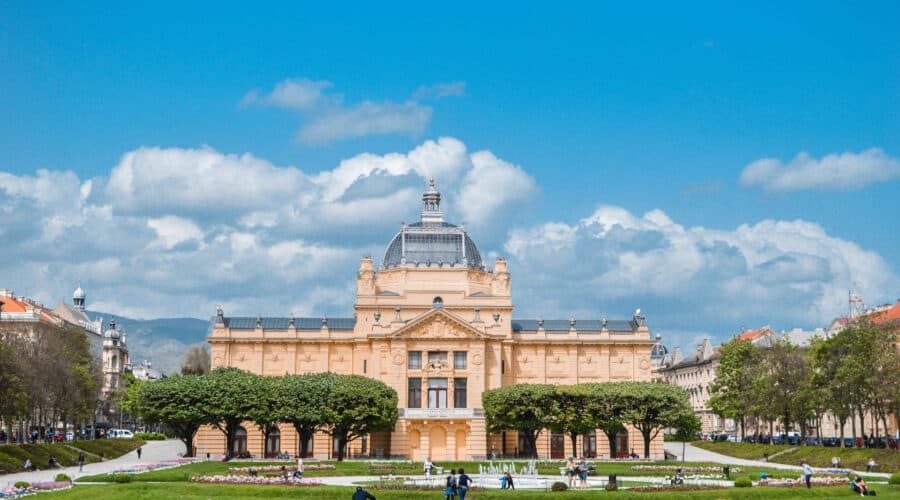
Zagreb to Split Private Transfer | From €480 | Rastoke, Plitvice Lakes, Zadar & Šibenik Stops

From €480

Book now
Zagreb to Split Private Transfer | From €480 | Rastoke, Plitvice Lakes, Zadar & Šibenik Stops private transfer in Croatia

Private Transfer · from 4 hours · Door-to-door private transfer

Zagreb to Split Private Transfer | From €480 | Rastoke, Plitvice Lakes, Zadar & Šibenik Stops

Private transfer from Zagreb to Split from €480 per vehicle. Door to door pickup from your hotel or airport, English-speaking driver, optional stops at...

FromZagreb
ToSplit

Starting from

480

Private price per vehicle with pickup, luggage space and bottled water.

Private transfer overview

Private transfer story

Zagreb to Split Private Transfer | From €480 | Rastoke, Plitvice Lakes, Zadar & Šibenik Stops — comfort, timing and your route

Private Transfer from Zagreb to Split: How It Works? Zagreb sits at 122 metres above sea level, surrounded by gentle hills and the flat agricultural plains of the Pannonian basin. Split sits at the edge of the Adriatic, surrounded by white limestone and islands. The drive between them covers around 480 kilometres and crosses the full breadth of what Croatia actually is from the baroque and continental capital through the forested karst highlands, past waterfalls and canyon lakes, down through the Dalmatian coast, and finally to the sea. Most people who make this journey by bus or train treat it as a transit. They board in Zagreb, sit for four to five hours, and arrive in Split having seen Croatia through a window without stopping. On a private transfer, the same journey becomes the first full day of the coast portion of your trip or the last full day before flying home with four of the most rewarding destinations in the country available as stops along the way. Your driver meets you at your hotel, apartment, or Zagreb Airport. If you have an early morning flight arriving into Zagreb and want to continue south the same day, departure can be timed to your landing. Luggage goes directly into the vehicle. The departure time is yours to set. Rastoke comes first a village of watermills built on top of waterfalls in the river valley south of Karlovac, almost unknown outside Croatia and consistently one of the stops that surprises people most. Plitvice Lakes follows sixteen terraced lakes in a forested canyon, connected by travertine waterfalls and wooden boardwalks, and one of the most visually remarkable landscapes in Europe. Then the road reaches the coast, where Zadar offers a Roman forum still open in the city centre and a waterfront facing the open Adriatic. And finally Šibenik a medieval Croatian city on a hillside above the channel, with a UNESCO cathedral that most travellers on the motorway drive past without realising it is there. By the time you arrive in Split, you have not just transferred between two cities. You have crossed a country.

We give you

Time to actually experience the day

Pickup from your hotel, apartment, or Zagreb Airport including early morning flight arrivals

Optional stops at Rastoke, Plitvice Lakes, Zadar, or Šibenik any combination, confirmed before you travel

Drop off at your hotel, apartment, ferry port, or marina in Split

100% private vehicle your group only, no shared rides, no fixed timetable

Departure set around your schedule airport pickup, hotel checkout, or onward island connection

English speaking driver with local knowledge of every stop from Zagreb to the coast

VAT included, no hidden fees

What you will experience

The story of the tour

Optional Stops on Your Way from Zagreb to Split

The route south from Zagreb to Split is not a motorway corridor through empty countryside. It passes through four genuinely different landscapes river valleys, karst canyon, coastal plain, limestone coast and the four optional stops on this route each sit at a different point in that transition. Each one offers something the others do not. Rastoke: Watermills on Top of Waterfalls, 90 Minutes from Zagreb Rastoke is almost always the stop that surprises people most on this route, partly because few travellers have heard of it before their driver mentions it and partly because what it delivers is so far removed from any reasonable expectation. The village sits at the confluence of the Slunjčica and Korana rivers near the town of Slunj, about 90 minutes south of Zagreb and 30 minutes north of Plitvice Lakes. Where the Slunjčica meets the Korana, it drops over a series of travertine waterfalls not in a single dramatic plunge but in a wide, terraced cascade of channels and pools and curtains of water that fall away in every direction at once. The watermills and wooden houses that make up the village were built across several centuries directly on top of and around these falls. Some buildings are cantilevered over the water on stone pillars. Others have the river running visibly beneath their floors through open channels in the rock. The mills still work their wooden wheels turn in the same streams that have been driving them for hundreds of years, and the sound of the machinery mixes with the sound of the falling water in a way that is impossible to separate. Rastoke is still an inhabited village. People live in these houses, hang washing between the buildings, and keep small vegetable gardens at the edges of the waterfalls. That combination working village, working mills, and water falling away in every direction gives the place a quality that photographs almost never capture. What they capture is the scenery. What photographs miss is the sound, the scale at which everything happens, and the strangeness of standing in someone's garden with a waterfall three steps to your left. A stop at Rastoke adds approximately 60 minutes. An entrance fee applies and is paid at the village. This stop can be added during the booking process. Plitvice Lakes: Sixteen Lakes, Travertine Waterfalls, and a Canyon That Changes with Every Season Plitvice Lakes National Park is the most visited natural attraction in Croatia and one of the most distinctive landscapes in Europe not because of a single dramatic feature but because of what happens when you put sixteen terraced lakes, dozens of waterfalls, dense beech and fir forest, and a limestone canyon in the same place and connect them with wooden boardwalks at water level. The lakes descend in steps from the upper plateau to the lower canyon, each one a different shade of turquoise, green, or deep blue depending on the mineral content of the water, the season, and the angle of the light. The waterfalls that connect them range from narrow threads dropping between mossy walls to broad curtains of white water falling more than thirty metres into the pools below. The boardwalks run along the edges of the lakes, cross the waterfalls on low bridges, and occasionally pass close enough behind the falling water to feel the spray on your face. The lower lakes section the most dramatic, most photographed, and most visited part of the park takes approximately 90 minutes to walk at a comfortable pace and covers the largest waterfall, several of the connected cascade sequences, and the boardwalks that cross and recross the river at lake level. The full circuit of both upper and lower lakes takes 3 to 4 hours and is better suited to a dedicated visit or an overnight stay near the park. For a transfer stop with one or two other stops planned for the same day, the lower lakes circuit gives you the most rewarding 90 minutes in the park. The park is beautiful in every season. In spring, snowmelt fills the upper lakes and the falls run at maximum volume. In summer, the forested canyon stays cooler than the coast even on the hottest days. In autumn, the beech trees turn the canyon walls orange and red above the same turquoise water. In winter, the falls freeze into columns and curtains of ice that hang between the rocks in silence. Entrance fees vary by season and are paid at the park gate. They are not included in the transfer price. This stop can be added during the booking process. Zadar: Where the Route Meets the Sea Zadar is the first major coastal city on the route south and the moment the trip changes character. The karst highlands give way to the coastal plain, the Adriatic appears between the hills, and the air shifts from forest cool to sea warm within a few kilometres. Zadar is where that transition arrives. The old town sits on a narrow peninsula with water on three sides, following a Roman street plan that has been in continuous use for two thousand years. The forum stones are still there open to the sky in the city centre, not fenced off, not behind glass. A Roman column stands at one end. A 9th century Croatian church built directly on the ancient foundation stands at the other. Between them, people cross the square on their way to work, to the market, and to school. The Sea Organ on the Riva waterfront is built into the stone steps facing the open sea underwater pipes that use wave energy to produce a continuous, shifting sound that changes with the rhythm of the water. Next to it, the Sun Salutation collects solar energy during the day and releases it after dark as a circular light display in the pavement. The waterfront faces west, and the view across the open Adriatic toward the chain of outer islands at the end of the day is the one that Alfred Hitchcock called the most beautiful sunset in the world. A stop in Zadar adds approximately 90 minutes and works well as the first coastal stop after descending from the karst interior. This stop can be added during the booking process. Šibenik: A Medieval City That Earned Its UNESCO Status the Hard Way Šibenik is the final stop before Split and the one that most people on the coastal motorway drive past without a second thought. That is a consistent and correctable mistake. The city was founded in the early 11th century as a Croatian medieval settlement on a steep hillside above the Šibenik channel without the Roman grid that underlies Zadar, without the imperial palace that defines Split. It grew from a hillside upward and outward over several centuries, and that organic origin gives it a texture that the more famous coastal cities, for all their scale, do not have. The Cathedral of St James is what defines Šibenik architecturally and what earns the stop completely. A UNESCO World Heritage Site constructed over more than a hundred years between 1431 and 1535, the cathedral was built using a structural logic with no real precedent in Dalmatian architecture. The entire structure walls, vaults, and dome is assembled from interlocking cut stone without brick or mortar. The dome was raised without any temporary wooden framework underneath it, using a technique adapted from shipbuilding in which curved stone panels are locked together by geometry alone. Three architects worked on it across three generations. The building does not look like it was engineered. It looks like it was solved. The 71 stone portrait faces carved around the exterior base are the detail that most visitors return to after walking the rest of the building individual faces drawn from real 15th-century Šibenik residents, each one specific enough to suggest an actual person, each one different from every other. Above the cathedral, St Michael's Fortress offers a panoramic view across the channel and the outer Kornati islands. The streets between them are quiet, stone-paved, and free of the tourist density that fills equivalent spaces in Split during the summer months. A stop in Šibenik adds approximately 90 minutes and works naturally as the final stop before Split — close enough to the city that arriving after Šibenik still leaves the afternoon ahead. This stop can be added during the booking process.

Suggested itinerary

Your day, your way

Step 1

Zagreb: Your driver meets you at your hotel, apartment, or Zagreb Airport at the agreed time. For airport pickups, departure is timed to your landing and baggage collection no fixed window, no waiting stress. For hotel pickups in Zagreb's upper town, your driver confirms the nearest accessible meeting point in advance.

Step 2

Optional stop Rastoke: Watermills and wooden houses built directly on top of cascading waterfalls at a river confluence south of Karlovac. Almost unknown outside Croatia. Almost always the stop that exceeds expectations. Allow 60 minutes. Entrance fee paid at the village.

Step 3

Optional stop Plitvice Lakes: Sixteen terraced lakes and travertine waterfalls in a forested limestone canyon. Croatia's most visited national park, directly on the road between Zagreb and the coast. The lower lakes circuit takes approximately 90 minutes. Entrance fee paid at the park.

Step 4

Optional stop Zadar: The first coastal city on the route south. A Roman forum still open in the city centre, the sea organ on the Riva, and your first proper view of the open Adriatic. Allow 90 minutes.

Step 5

Optional stop Šibenik: The Cathedral of St James, St Michael's Fortress, and a medieval city built on a hillside without Roman foundations. The most rewarding 90 minute stop on the southern stretch of the coast before Split.

Step 6

Split: Drop off at your hotel, apartment, ferry port, or marina. For addresses inside or adjacent to Diocletian's Palace, your driver drops you at the nearest accessible gate and advises on the walking route to your accommodation. Direct ferry terminal drop off available for onward island connections.

Transfer map

Approximate route

Approximate private transfer route from Zagreb to Split.

Final pickup point depends on access restrictions, traffic and luggage needs.

Zagreb to Split Private Transfer | From €480 | Rastoke, Plitvice Lakes, Zadar & Šibenik Stops private transfer route background
1

Zagreb: Your driver meets you at your hotel, apartment, or Zagreb Airport at the agreed time. For airport pickups, departure is timed to your landing and baggage collection no fixed window, no waiting stress. For hotel pickups in Zagreb's upper town, your driver confirms the nearest accessible meeting point in advance.

2

Optional stop Rastoke: Watermills and wooden houses built directly on top of cascading waterfalls at a river confluence south of Karlovac. Almost unknown outside Croatia. Almost always the stop that exceeds expectations. Allow 60 minutes. Entrance fee paid at the village.

3

Optional stop Plitvice Lakes: Sixteen terraced lakes and travertine waterfalls in a forested limestone canyon. Croatia's most visited national park, directly on the road between Zagreb and the coast. The lower lakes circuit takes approximately 90 minutes. Entrance fee paid at the park.

4

Optional stop Zadar: The first coastal city on the route south. A Roman forum still open in the city centre, the sea organ on the Riva, and your first proper view of the open Adriatic. Allow 90 minutes.

5

Optional stop Šibenik: The Cathedral of St James, St Michael's Fortress, and a medieval city built on a hillside without Roman foundations. The most rewarding 90 minute stop on the southern stretch of the coast before Split.

6

Split: Drop off at your hotel, apartment, ferry port, or marina. For addresses inside or adjacent to Diocletian's Palace, your driver drops you at the nearest accessible gate and advises on the walking route to your accommodation. Direct ferry terminal drop off available for onward island connections.

Transfer comfort

What is included

Private transfer essentials for airport, city-to-city and national park routes.

English speaking driver: Knows Zagreb Airport pickup logistics, the seasonal access options for Plitvice, the walking approach to Šibenik's cathedral, and Split's ferry terminal and palace gate drop-off options. Local knowledge across the full length of the country not just the endpoints.

Included as part of your private transfer.

Door-to-door pickup; Pickup at your hotel, apartment, or Zagreb Airport. Drop-off at your exact address in Split hotel lobby, apartment entrance, ferry terminal, or marina. For island connections, drop off is timed to your ferry departure if arranged at booking.

Included as part of your private transfer.

Transportation and fuel: All vehicle costs, fuel, and motorway tolls for the full Zagreb to Split route are included. Entrance fees at Rastoke and Plitvice Lakes are paid at the site and are not part of the transfer price.

Included as part of your private transfer.

A/C vehicle:Sedan for 1–3 passengers or van for 1–8 passengers, both fully air-conditioned. On a long-distance transfer that crosses from continental to Mediterranean climate in a single day, a comfortable vehicle is not a detail it is the difference between arriving rested and arriving drained. Vehicle type selected at booking.

Included as part of your private transfer.

Route options

Good to know

Details that make private transfers easier than shared transport.

Pickup from your hotel, apartment, or Zagreb Airport including early morning flight arrivals

This option can be clarified before transfer confirmation.

Optional stops at Rastoke, Plitvice Lakes, Zadar, or Šibenik any combination, confirmed before you travel

This option can be clarified before transfer confirmation.

Drop off at your hotel, apartment, ferry port, or marina in Split

This option can be clarified before transfer confirmation.

100% private vehicle your group only, no shared rides, no fixed timetable

This option can be clarified before transfer confirmation.

Departure set around your schedule airport pickup, hotel checkout, or onward island connection

This option can be clarified before transfer confirmation.

English speaking driver with local knowledge of every stop from Zagreb to the coast

This option can be clarified before transfer confirmation.

VAT included, no hidden fees

This option can be clarified before transfer confirmation.

Choose your preferred date

Add a guide if you want a deeper experience

Enjoy flexible booking options

Get fast confirmation

FAQ

How long does the drive from Zagreb to Split take?

The direct private transfer from Zagreb to Split takes approximately 4 to 4.5 hours, covering around 480 kilometres. Adding stops extends the journey: Rastoke adds approximately 60 minutes, Plitvice Lakes adds 2 to 3 hours depending on the trail circuit, Zadar adds 90 minutes, and Šibenik adds 90 minutes. With all four stops, plan for a full travel day of 10 to 12 hours. A departure from Zagreb between 6 and 8 in the morning is recommended for days with three or more stops.

How much does a private transfer from Zagreb to Split cost?

A private transfer from Zagreb to Split starts from €480 per vehicle not per person. The price includes door to door pickup from your hotel, apartment, or Zagreb Airport, an English-speaking driver, fuel, motorway tolls, and VAT. Entrance fees at Rastoke and Plitvice Lakes are paid at the site and are not included. Up to 3 passengers travel in a sedan and up to 8 in a van. For a group of three or more, the per person cost is often lower than individual bus or train tickets combined with separate attraction bookings.

Is a private transfer from Zagreb to Split better than the bus or train?

For most travellers, yes. The bus from Zagreb to Split takes 5 to 6 hours on a direct service, operates on fixed timetables, and arrives at the Split bus station rather than your accommodation. The train is slower, involves a change, and has no coastal section. Neither allows stops. A private transfer takes 4 to 4.5 hours door to door, picks you up at your exact address or at the airport, allows stops at Rastoke, Plitvice, Zadar, and Šibenik without separate bookings, and drops you directly at the Split ferry terminal for island connections.

Can I be picked up at Zagreb Airport?

Yes. Zagreb Airport pickup is available and is one of the most common starting points for the Zagreb to Split transfer. Your driver meets you in the Arrivals hall and departure is timed to your flight landing and baggage collection. If the flight is delayed, your driver tracks the updated arrival time. Confirm your flight number when booking and the logistics are handled from there.

Is Plitvice Lakes worth stopping at on the Zagreb to Split transfer?

Yes, and for many travellers arriving from Zagreb who have not yet seen the Croatian interior, Plitvice becomes one of the clearest memories of the entire trip. The lower lakes circuit takes approximately 90 minutes and covers the most dramatic section of the park: the large lower waterfall, the boardwalk cascades, and the lake-level views up through the canyon. For a more complete visit that includes the upper lakes, allow 3 to 4 hours or combine with an overnight stay near the park before continuing to Split the following morning. Both can be arranged as part of a private transfer.

What is Rastoke and why is it worth stopping at?

Rastoke is a small village near Slunj, about 90 minutes south of Zagreb and 30 minutes north of Plitvice, where watermills and wooden houses have been built directly on top of travertine waterfalls at the confluence of two rivers. The falls are smaller and more intimate than Plitvice or Krka you walk across bridges a metre above the cascades, look down through gaps in the stone at the water below, and hear the mills turning. The village is still inhabited. The combination of working mill machinery, wooden architecture, and continuous falling water in every direction gives Rastoke a quality that is almost impossible to describe accurately and very easy to understand once you are there. It is consistently the stop that travellers on this route say they are most glad they did not skip. An entrance fee applies and is paid at the village.

Can I combine Rastoke and Plitvice Lakes on the same transfer?

Yes, and it is the most natural combination on this route. Rastoke sits 30 minutes north of Plitvice on the same road, which means stopping at Rastoke first and then continuing to Plitvice adds only 60 minutes to the Plitvice stop itself. Together they add approximately 3 to 4 hours to the journey. A departure from Zagreb by 7 in the morning with both stops delivers you to Zadar or Split by early evening without feeling rushed. Adding Zadar or Šibenik to the same day requires a very early start best discussed with the team before booking.

Can I stop at Zadar and Šibenik on the way from Zagreb to Split?

Yes. Both coastal stops work well on the same day as the inland stops if the departure from Zagreb is early enough. The sequence that works best is Rastoke first, then Plitvice, then Zadar, then Šibenik before Split following the natural geography of the route south. With all four stops, a departure from Zagreb between 6 and 7 in the morning is recommended. Your driver will advise on the best combination based on your available time and which stops matter most.

Where does the driver pick me up in Zagreb?

Pickup is door to door from the closest accessible point to your address hotel lobby, apartment entrance, or Zagreb Airport Arrivals. Zagreb's historic upper town Gornji Grad has some vehicle access restrictions, so for addresses in that area, your driver confirms the nearest accessible meeting point in advance. For all other Zagreb addresses, pickup is directly at your entrance.

Where does the driver drop me off in Split?

Drop off is door to door at your hotel, apartment, ferry terminal, or marina in Split. For addresses inside or adjacent to Diocletian's Palace, where pedestrian zones restrict vehicle access, your driver drops you at the nearest accessible gate typically the Golden Gate on the north side or the Bronze Gate on the waterfront and advises on the short walking route to your accommodation. Ferry terminal drop off is available directly at the Split port for travellers with onward island connections.

Can I do this transfer in reverse Split to Zagreb?

Yes. The same route and the same optional stops Šibenik, Zadar, Plitvice Lakes, and Rastoke are available in the reverse direction, Split to Zagreb, at the same price. This is a popular option for travellers finishing their time on the coast and flying home from Zagreb. Contact the team or use the booking form to arrange the return journey or a two-way transfer at once.

What is the cancellation policy?

Cancellation is free up to 24 hours before your scheduled departure. All passengers are fully insured during the journey. For special requests, larger groups, or custom timing, contact the team directly via WhatsApp before booking.

Ready when you are

Reserve Zagreb to Split Private Transfer | From €480 | Rastoke, Plitvice Lakes, Zadar & Šibenik Stops with flexible booking and fast confirmation.

Free cancellation up to 24 hours before departure. For special requests, larger groups or custom timing, contact us on WhatsApp.

WhatsApp us