
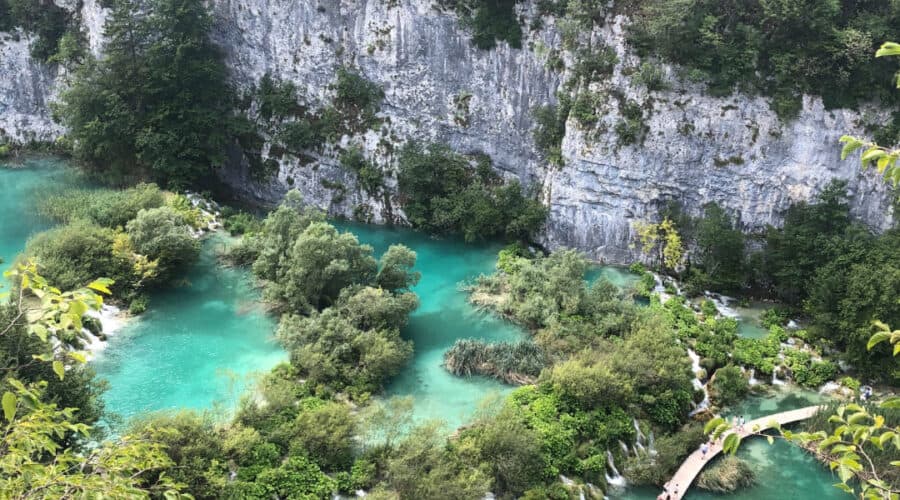
Optional Stops on Your Way from Plitvice Lakes to Dubrovnik
The route south from Plitvice Lakes to Dubrovnik passes through the full length of the Dalmatian coast which means every stop along the way adds something genuinely different to your day. These four destinations are all on or close to your route and each one is worth the extra time. Zadar: A Roman Forum, a Sea Organ, and a Sunset That Stops People in Their Tracks Zadar is the most underrated city on the Adriatic coast and the most natural first stop after leaving Plitvice. The old town sits on a narrow peninsula surrounded by sea on three sides, and within a ten minute walk you can stand in front of a Roman forum that has been in continuous use for two thousand years, listen to the world's only sea organ an architectural installation built into the stone steps of the waterfront where the waves push air through underwater pipes and produce a constant, shifting chord and watch the sun set over the open sea from a spot that Alfred Hitchcock once called one of the most beautiful in the world. Away from the waterfront, the old town is full of medieval churches, quiet squares, and good restaurants that have not yet been entirely taken over by tourism. Zadar is a city where people still go about their day around you, which makes it feel more alive than the more famous stops further south. A stop in Zadar adds approximately 60 to 90 minutes to your journey and works naturally as a morning or midday stop after leaving Plitvice. This stop can be added during the booking process. Split: Diocletian's Palace, the Waterfront, and a City Built Inside a Roman Ruin Split is the largest city on the Dalmatian coast and one of the most architecturally remarkable places in Europe. Diocletian's Palace a UNESCO World Heritage Site built in the 4th century as a retirement complex for a Roman emperor is not a ruin you visit from the outside. It is a living neighbourhood. Restaurants, bars, apartments, and workshops occupy the original Roman chambers and corridors. The cathedral was once Diocletian's mausoleum. The streets follow the original Roman grid. People live, cook, and hang their laundry inside walls that are 1,700 years old. The Riva waterfront runs along the southern edge of the palace, lined with cafés and boats and views across to the islands of Brač and Hvar. A short walk through the palace gates and you are in one of the most concentrated collections of Roman, medieval, and modern architecture in the world. A stop in Split adds approximately 60 to 90 minutes to your journey and is an excellent midday stop with a long lunch on the Riva before continuing south to Dubrovnik. This stop can be added during the booking process. Ston: Medieval Walls, Salt Pans, and the Finest Oysters in the Adriatic Ston sits at the entrance to the Pelješac peninsula, which the coastal road passes through naturally on the way south toward Dubrovnik. This small medieval town is home to Europe's longest preserved city walls over five kilometres of stone fortifications built in the 14th century to protect the salt pans that funded the Dubrovnik Republic for centuries. Walk a section of the walls for sweeping views across Mali Ston bay, the peninsula, and the open sea. At the harbour, fresh oysters are farmed directly in the channel between the peninsula and the mainland some of the finest in the Mediterranean, eaten metres from where they were harvested. Pair them with a glass of local white wine at one of the waterfront tables and you have one of the best spontaneous meals the Dalmatian coast can offer. After a long day of driving, this is exactly the kind of stop that makes the journey feel like the destination. A stop in Ston adds approximately 60 to 90 minutes to your journey and works perfectly as an afternoon stop before the final stretch to Dubrovnik. This stop can be added during the booking process. Pelješac Winery: Wine Tasting on Steep Slopes Above the Sea The Pelješac peninsula produces some of Croatia's most celebrated red wines. Plavac Mali, the local grape variety, grows on steep, south-facing slopes above the Adriatic and is known for its deep colour, high alcohol, and full body the result of long hours of direct sun and constant sea air. These are wines with a strong sense of place, and that place is one of the most beautiful you will find on your trip. On a private transfer stop, you can visit a small family owned winery, taste two or three wines, and enjoy local olive oil, cheese, and dried figs alongside them. The setting stone terraces and vineyards overlooking the open sea is unlike anything you will find in the cities. Wine tasting is arranged as an optional add-on during the booking process and is not included in the base transfer price. Combining Ston and the Pelješac winery in one stop is the most popular option on this final stretch of the route. Both are on the same peninsula and work naturally together: oysters and walls in Ston, then wine and views at the winery a short drive further along. Most travellers who drive from Plitvice Lakes to Dubrovnik with stops choose one or two along the way. Your driver knows the route, the timing, and the best versions of each stop, and will help you plan the day based on your departure time and arrival preferences.