
Optional Stops on Your Way from Split to Plitvice Lakes
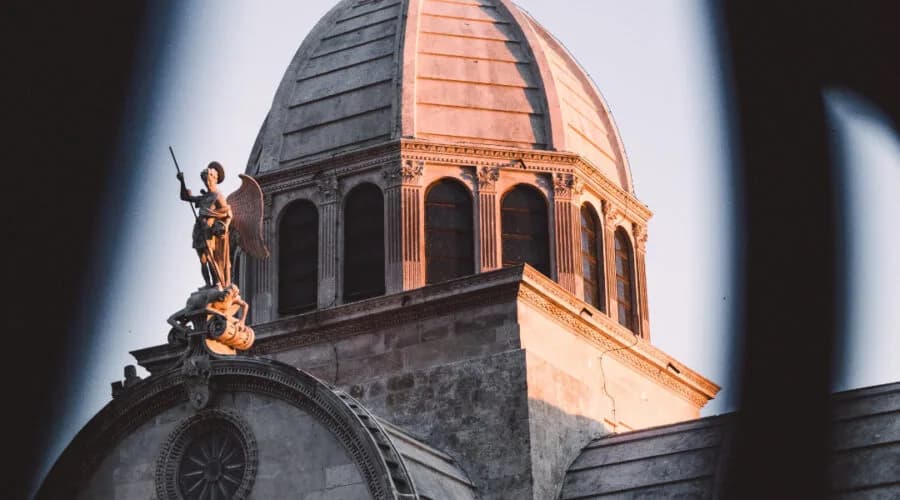
The road north from Split follows the coast through some of the most historically dense territory in the Adriatic before climbing inland toward the Lika plateau. Two cities sit naturally on the route and both of them are worth more time than most travellers give them. Šibenik: A Cathedral Built Without Brick, a Fortress Above the Rooftops Šibenik is the first significant city north of Split and one of the most underestimated places on the entire Dalmatian coast. Unlike Zadar or Split, it was not founded by Romans or Greeks. It grew from a Croatian medieval settlement on a hillside above the channel organically, slowly, without the grand imperial planning that gave other coastal cities their shape. That origin gives Šibenik a character that is entirely its own. The Cathedral of St James dominates the old town and justifies every minute of the stop. A UNESCO World Heritage Site, it was built entirely from interlocking cut stone no brick, no mortar in the main structure. The dome was assembled using a technique borrowed from shipbuilding, with curved stone panels fitted together without any supporting framework beneath. The project took over a hundred years and three architects to complete. From the outside, the cathedral looks as if it grew from the rock rather than was built on it. The 71 stone portrait faces carved around the exterior base are the building's most memorable detail each one different, drawn from the faces of real 15th-century Šibenik residents. Some are serene, some troubled, a few almost smiling. Above the old town, St Michael's Fortress offers panoramic views across the channel and the Kornati archipelago. The streets between the fortress and the cathedral are quiet, narrow, and free of the tourist density that fills similar spaces in Split or Dubrovnik. A stop in Šibenik adds approximately 90 minutes to your journey and works best as the first stop after leaving Split, while the coast is still close and the day is still fresh.
Zadar: A Roman Forum in the Middle of a Living City
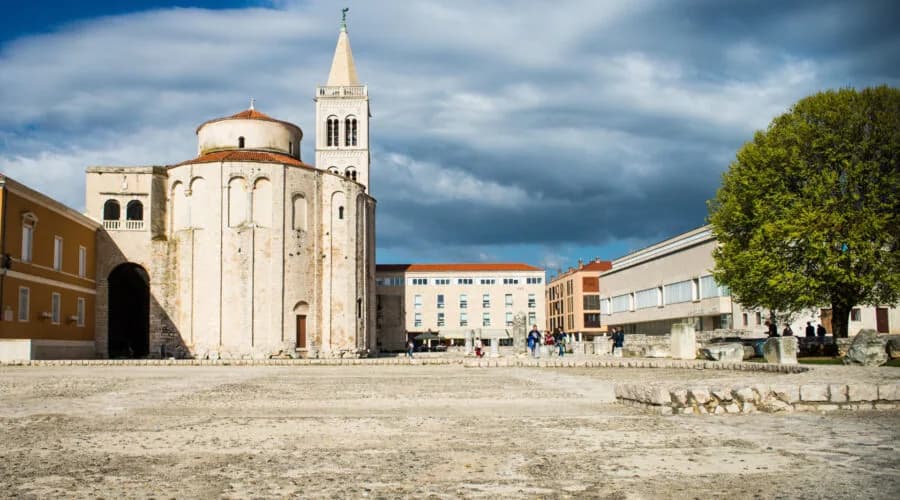
Zadar sits a short drive north of Šibenik and offers something completely different a city that is simultaneously ancient and functional, where Roman ruins and medieval churches share space with bakeries, fish markets, and school children on their way home. The old town occupies a narrow peninsula surrounded by sea, with a street plan that follows the original Roman grid. The forum is still there, open to the sky in the centre of the city not behind glass, not roped off, just present in the middle of things. A Roman column stands at one end. The Church of St Donatus, built directly on the ancient foundation in the 9th century, stands at the other. Between them is a square where people sit, eat lunch, and take photographs without it feeling particularly extraordinary, which is perhaps the most extraordinary thing about it. The waterfront runs along the western edge of the old town, facing the open sea and the long chain of islands that stretches toward Zadar's archipelago. The Sea Organ a waterfront installation designed by architect Nikola Bašić uses wave energy channelled through pipes beneath the stone steps to produce a continuous, shifting sound that changes with the movement of the sea. It is one of those things that sounds like a tourist gimmick until you hear it. A stop in Zadar adds approximately 90 minutes to your journey. If you are visiting in the late afternoon, the sunset from the Zadar waterfront is one of the most celebrated in Croatia — Alfred Hitchcock once called it the most beautiful in the world. For travellers arriving from Split in the morning, a midday stop in Zadar gives the old town in good light and the waterfront before the afternoon crowds. The two stops work well together in sequence Šibenik as the first encounter with medieval Dalmatia north of Split, Zadar as the broader, more open coastal city before the route turns inland toward Plitvice. Your driver knows the timing and can suggest the best combination based on your departure from Split and your planned arrival at the park.