
Krka National Park — Where the River Builds Its Own Architecture
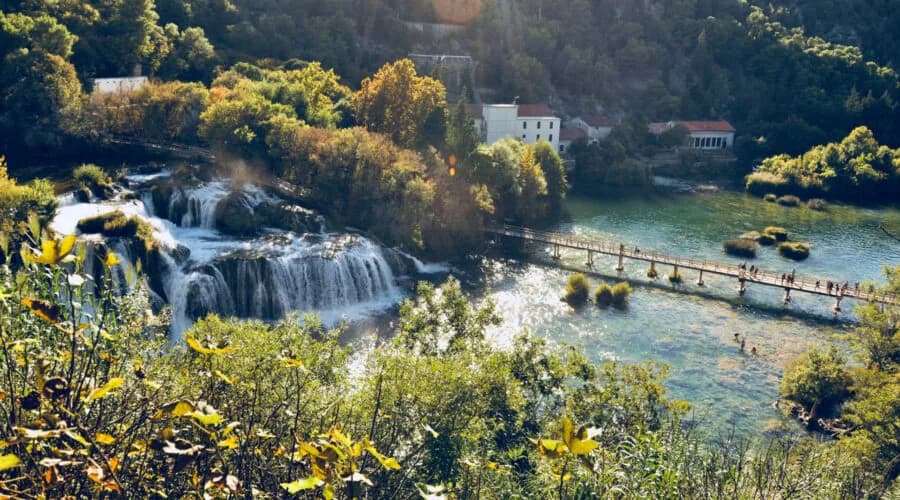
The Krka River has been carving its way through limestone karst for thousands of years, and what it has created along the way is unlike anything else in Europe. Krka National Park protects a series of cascading lakes and waterfalls stretching across seven kilometres of river canyon. The centrepiece is Skradinski Buk — sixteen terraced waterfalls dropping 45 metres, surrounded by travertine formations that take centuries to build a single centimetre. The boardwalks that wind around and above the falls put you close enough to feel the spray. But Krka isn't just a waterfall. It's an entire river ecosystem. Herons fish from the shallows. Watermills that have stood for hundreds of years still sit beside the flow. In spring, the surrounding meadows bloom white and yellow. In autumn, the canyon turns amber and rust. There is no bad season to come here — only different reasons to return.
Explore
Skradinski Buk, one of the most photographed waterfalls in Europe
Wooden boardwalks winding through the canyon above the cascades
A national park that rewards slow walkers more than fast ones Optional swimming in the lower pools (seasonal, summer months)
One of Croatia's most biodiverse river landscapes
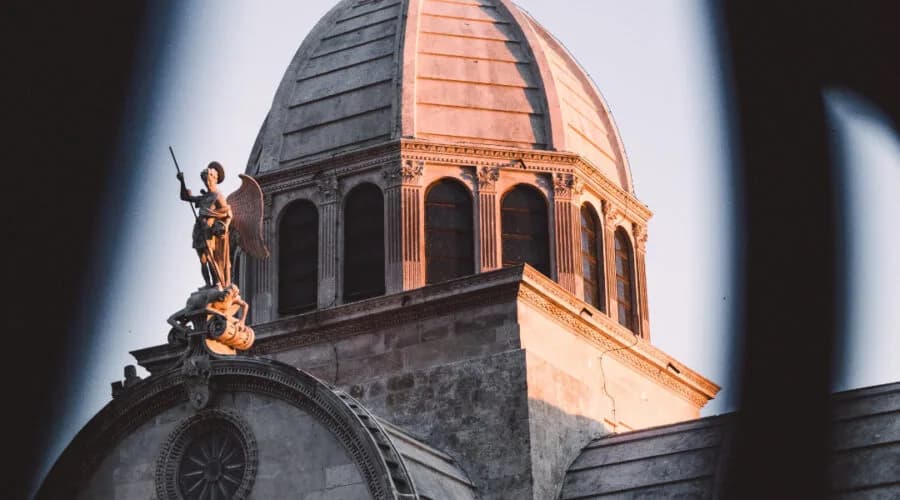
Šibenik Old Town The Adriatic City That Grew Without a Roman Blueprint Almost every coastal city in Dalmatia was built on Roman foundations. Šibenik was not. Founded in the 11th century by Croatian kings — not Roman colonists, not Venetian merchants Šibenik has always had its own identity. Its old town climbs a hillside above the harbour in a tangle of steep stairways and narrow passages that connect small squares, hidden churches and views that open unexpectedly over terracotta rooftops and blue water below. At the centre of it all stands the Cathedral of St James — a UNESCO World Heritage Site and one of the most remarkable buildings in the entire Mediterranean. It took 105 years to complete, across the work of three master architects, and it was constructed almost entirely from stone without mortar, each block cut and fitted with a precision that still puzzles engineers today. The faces of 71 citizens of Šibenik are carved in stone along the cathedral's exterior walls — a kind of medieval portrait gallery, preserved for six centuries. Unlike Split or Dubrovnik, Šibenik has not yet been reshaped entirely around tourism. Locals still live in the old town. The café beside the cathedral is genuinely local. The fish market by the harbour sells what came in that morning. Walking here feels like a discovery rather than a visit.
Explore
The Cathedral of St James, a UNESCO World Heritage Site built without mortar
71 stone portrait faces carved into the cathedral's exterior frieze
Medieval street layout that predates Venetian influence
A working harbour town with an unhurried pace
Some of the best seafood restaurants on the northern Dalmatian coast
Optional: Dalmatian Wine Tasting — Swap Šibenik for Something Different
The land between Split and Šibenik produces some of Croatia's most distinctive wines. Plavac Mali — a grape found almost nowhere else on Earth — thrives in the rocky, sun-scorched soils of the Dalmatian hinterland, producing deep, full-bodied reds that pair naturally with the local food. If your group prefers a different kind of afternoon, your second stop can be replaced with a visit to a local winery: a quieter, more personal experience that takes you off the main road and into the landscape itself. Taste directly with producers, learn what makes Dalmatian viticulture unlike anything in France or Italy, and take a bottle or two home. This option is seasonal and subject to winery availability — confirm during booking or via WhatsApp.